The Great Graphics Obsession
Every year, gamers find themselves entranced by the latest graphics showcases — we drool over trailers that promise breathtaking visuals and jaw-dropping worlds. Console wars erupt as hardware enthusiasts debate over polygons, ray tracing, and benchmark scores.
But let’s be honest: we often spend more time discussing graphics than actually playing games. I mean, I’ve seen friendships end over games with graphics that resemble PowerPoint presentations!
Why Good Gameplay Never Ages
So, why do some games hold our attention long after their graphics fade into obscurity? It comes down to mechanics, challenge, progression, creativity, and replayability. Players remember experiences, not texture resolution. It’s the feeling of conquering a tough boss, the joy of exploring a vast world, or the thrill of a perfectly timed jump that sticks with us.
Example #1: Minecraft
Minecraft is a prime example of how simple visuals can lead to infinite creativity. Built from cubes, it became one of the biggest games in history, allowing players to create their own worlds and adventures. Its cultural impact is undeniable; who hasn’t spent hours building elaborate structures or just digging down to bedrock?
Example #2: Vampire Survivors
This game took the world by storm with its intentionally simple visuals and addictive gameplay loop. The progression systems are so enticing that I’ve accidentally lost entire evenings to it. It’s the kind of game that lures you in with its simplicity but keeps you hooked with its depth.
Example #3: Stardew Valley
With its charming pixel graphics, Stardew Valley has captured the hearts of millions. What’s the secret? Emotional attachment. Players willingly spend hundreds of hours farming digital vegetables, building relationships, and creating their own little slice of paradise. The nostalgia factor is real, and it’s a game that makes you feel at home.
Example #4: Terraria
Terraria’s 2D presentation belies the depth hidden beneath its simplicity. Exploration and discovery are at the game's core, and the sheer amount of content available can keep players engaged for ages. It’s a game that encourages creativity while rewarding exploration — a true testament to how visuals don’t dictate quality.
Example #5: Among Us
Among Us took the gaming world by storm with minimal visuals and an emphasis on social gameplay. It became a cultural phenomenon as players navigated trust and deception. It’s not about how the game looks; it’s about how it makes you feel when your friend accuses you of being the imposter!
The Trap of Chasing Visuals
Beware, fellow gamers! Many players fall into the trap of spending thousands on hardware just to optimize performance for the same three games. Buying hardware for benchmarks can lead to missing out on great experiences. I upgraded my PC and somehow ended up replaying pixel art games for six months!
The Joy of Low-Spec Gaming
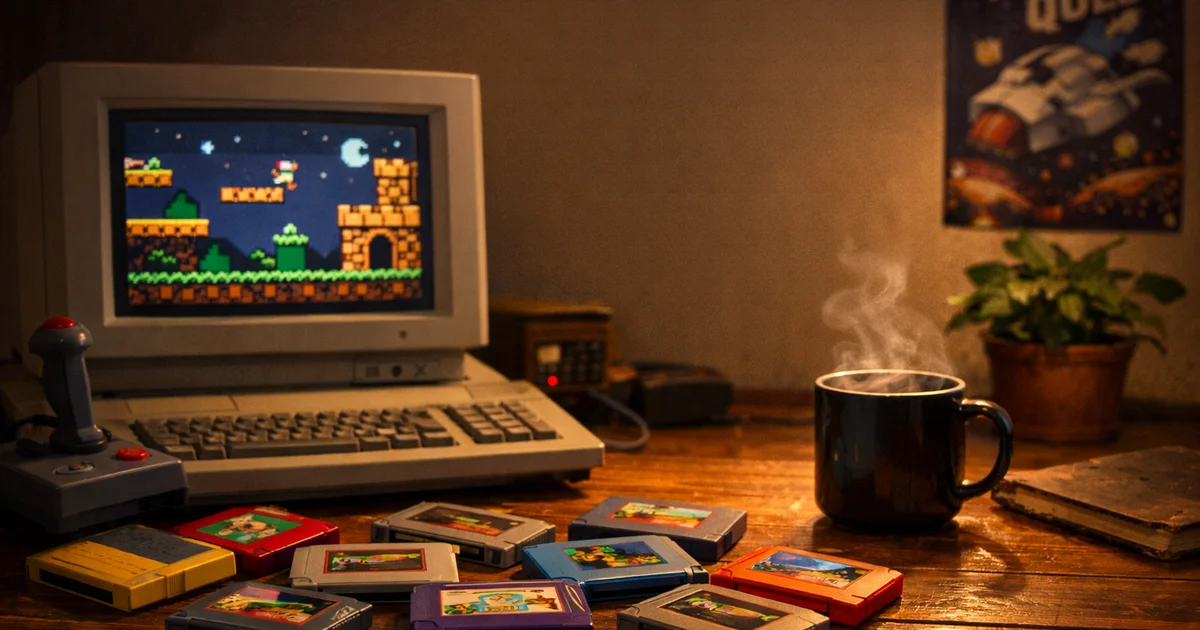
Let’s celebrate low-spec gaming! These games are accessible to anyone, whether you’re on an older computer, a laptop, or just looking for affordable gaming options. The joy of gaming shouldn’t be limited by your specs.
Conclusion
In the end, great games are remembered for how they make players feel, not for how many pixels they push. So, dust off that old favorite, jump back into a beloved world, and remember: it’s the experiences that count, not the graphics. Now, go play something fun!


Comments
Join the discussion — your nickname is saved in this browser.
for real though, who else has spent hours playing terraria and forgot to eat real food 🤣
imagine if every gamer just focused on having fun instead of graphics?? wild!
are we really pretending graphics don’t matter???