
Good Taste Has Almost Nothing to Do With Money

Have you ever encountered someone whose elegance seemed effortless, regardless of the price of their attire? It's a reminder that true style often transcends wealth.
Have you ever encountered someone whose elegance seemed effortless, regardless of the price of their attire? It's a reminder that true style often transcends wealth.
The other day, I found myself in a quaint café, sipping on a well-brewed espresso while observing the world around me. My gaze fell upon a woman seated across the room, her presence effortlessly elegant despite her unassuming attire. She wore no designer labels, yet there was something captivating about her—perhaps it was the way she carried herself or the thoughtful details of her appearance. This moment sparked a reflection on a common misconception: that taste, elegance, and style are inherently tied to wealth.
In a society where luxury brands often overshadow genuine beauty, many people mistakenly equate price with quality. However, as we delve deeper into the nuances of aesthetics, it becomes clear that true taste is rooted in confidence, self-awareness, and an appreciation for timeless design. Let’s explore these themes further and uncover why good taste has almost nothing to do with money.
It’s almost ingrained in our psyche to believe that higher price tags guarantee superior quality. This phenomenon is fueled by marketing strategies that create a perception of exclusivity. Luxury brands often capitalize on this belief, leading consumers to associate expensive items with quality craftsmanship. But the reality is that many affordable products can be equally, if not more, well-made than their high-priced counterparts.
Luxury is often a façade, a mask worn to project wealth and status. In contrast, beauty is inherently subjective, defined by personal preferences and cultural influences. A stunning piece of art or a beautifully crafted object can be appreciated for its aesthetic value, regardless of its price. True beauty resonates with us on a deeper level, invoking emotions and connections that surpass material worth.
Have you ever encountered a luxury item that felt ostentatious or gaudy? It’s a reminder that price does not equate to taste. Some expensive items lack authenticity, appearing more like status symbols than expressions of personal style. Authenticity is key; it’s what transforms an object from merely expensive to genuinely beautiful.
Confidence plays a pivotal role in how we perceive style. A person who wears their choices with assurance can elevate even the simplest garments. On the other hand, the most extravagant outfits can fall flat if not worn with conviction. The essence of good taste is not found in the labels we wear but in how we choose to present ourselves.
Our aesthetic choices are influenced by a myriad of factors, including culture, upbringing, and personal experiences. Understanding our preferences can lead to a more authentic expression of style. Rather than chasing trends, which can often feel inauthentic, we should focus on what resonates with us personally.
In the world of style, less is often more. Restraint can enhance elegance, making a statement without overwhelming the senses. An excess of accessories or bold patterns can detract from one’s overall appearance. Striking a balance and opting for simplicity can lead to a more refined and sophisticated look.
Self-awareness is crucial in developing one’s personal style. By understanding what feels authentic, we can curate a wardrobe that truly reflects who we are. This journey of self-discovery is not about conforming to societal expectations but about embracing individuality.
Trends can be alluring, but they often distract from the development of genuine taste. The constant influx of new styles can lead to a superficial understanding of fashion. Instead of focusing on fleeting trends, we should cultivate an appreciation for timeless design that transcends the whims of the fashion industry.
Timeless designs possess an innate quality that allows them to outlive fashion cycles. They are characterized by simplicity, functionality, and aesthetic appeal. As we explore examples of such designs, we can appreciate their beauty beyond mere status symbols.
Let’s delve into a few timeless items that exemplify the principles we’ve discussed. These products are not just about luxury; they represent enduring beauty and thoughtful design.
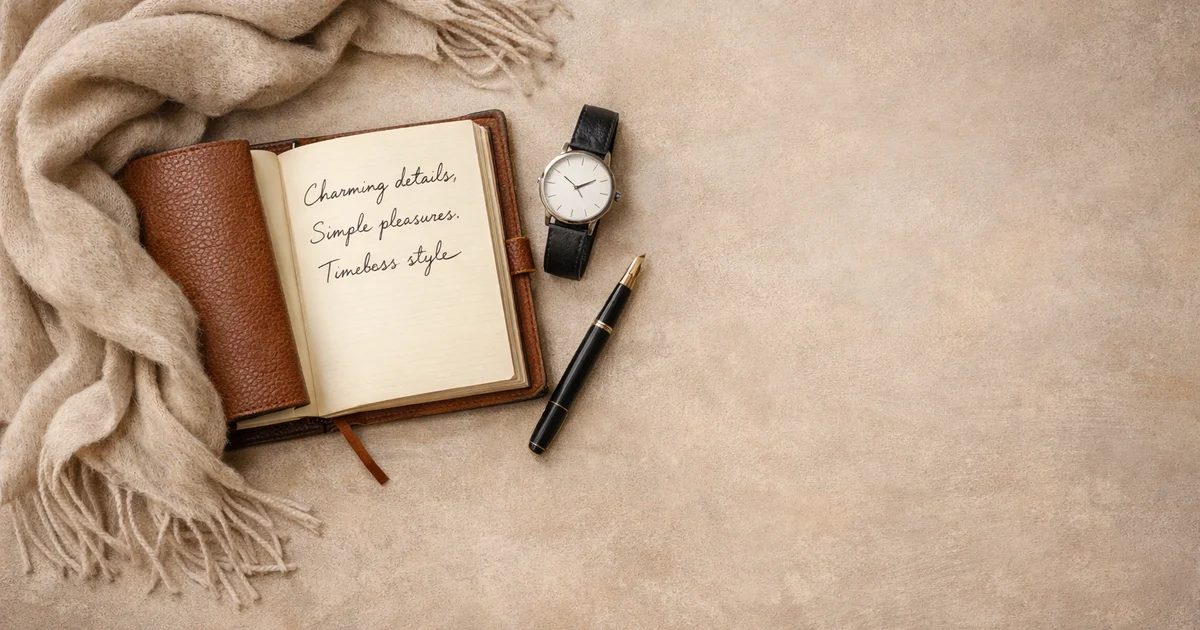
The Vintage Leather Journal from Leather Village is crafted from cruelty-free water buffalo leather, showcasing meticulous craftsmanship. This journal features 200 pages of handmade vintage deckle-edge paper, making it an impeccable canvas for writing and creativity. Its unique variations in appearance add to its authenticity, ensuring that no two journals are alike. The tactile nature of the leather and paper invites personal expression, making it a cherished companion for journaling or sketching.
See store for price
The FINTANIX Fountain Pen epitomizes elegance and functionality. With its sleek black finish and fine nib, this pen offers a smooth writing experience that redefines the act of putting pen to paper. It comes as a complete set, making it an ideal gift or a personal treasure for those who appreciate the art of writing. The pen's design combines both aesthetic appeal and practical use, underscoring the idea that beauty can enhance everyday tasks.
See store for price
The BUREI Ultra Thin Minimalist Watch is a testament to the beauty of simplicity. Its ultra-slim design and stainless steel mesh band create a low-key yet elegant look. This watch is not merely a timepiece but a versatile accessory that complements both casual and business outfits. Its understated charm lends itself to a timeless appeal, proving that true elegance lies in restraint.
See store for price
The Villand Cashmere Scarf is a luxurious yet practical piece that transcends seasonal trends. Made from 100% cashmere, it offers warmth and comfort without sacrificing style. The scarf's versatility allows it to be draped, wrapped, or knotted in various ways, making it suitable for both formal and casual occasions. Its enduring quality ensures that it remains a staple in any wardrobe for years to come.
See store for price
In conclusion, the intersection of taste, elegance, and personal style is not defined by monetary value. Instead, it is shaped by confidence, authenticity, and an appreciation for timeless design. As we navigate through a world often preoccupied with trends and luxury, let us remember that true beauty lies in simplicity and self-awareness. By cultivating our own taste, we can embrace a style that feels genuinely reflective of who we are, allowing us to express our individuality without the constraints of societal expectations. After all, good taste has almost nothing to do with money—it’s about the stories we choose to tell through our style.
Comments
Join the discussion — your nickname is saved in this browser.
Taste is personal, not something to flaunt with cash.
If good taste was money, I'd be broke.
Honestly, I've learned to appreciate how much confidence can change everything!